
In 2025, when we talk about AI in marketing, ChatGPT, Midjourney, Jasper, or Synthesia, we often forget the invisible powerhouse behind them all: NVIDIA AI.
Think about this: over 90% of today’s generative AI models (from OpenAI to Adobe Firefly) run on NVIDIA’s technology stack. Yet, most marketers never ask, “What makes these tools so fast, smart, and scalable?”
The answer lies not in the software but in the AI infrastructure, and NVIDIA is the undisputed leader in that space.
If you’re a marketer, understanding how NVIDIA AI works (and how it shapes your tools) can give you a serious edge in 2025 and beyond. Let’s break it down, simply, clearly, and with marketing in mind.
What is NVIDIA AI?
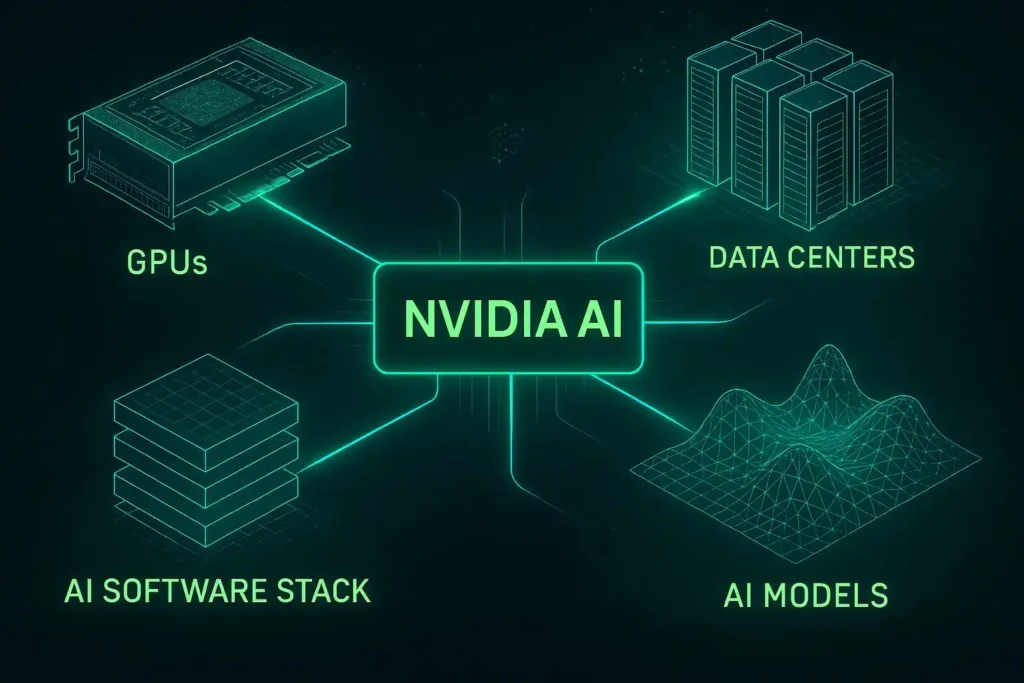
NVIDIA started as a GPU company, best known for powering gaming graphics. But over the past decade, it has quietly transformed into a full AI ecosystem provider, combining:
- Hardware: High-performance GPUs (like H100 and A100) designed for deep learning and data processing.
- Software Stack: CUDA, TensorRT, and AI frameworks optimised for large-scale model training.
- Platforms: NVIDIA AI Enterprise, Omniverse, DGX Cloud, and NeMo for generative AI development.
Together, these components form the NVIDIA AI stack, the foundation behind most of the world’s AI tools.
In simple terms: NVIDIA doesn’t just build chips; it builds the brains and muscle behind modern AI.
How NVIDIA AI is Shaping the World?
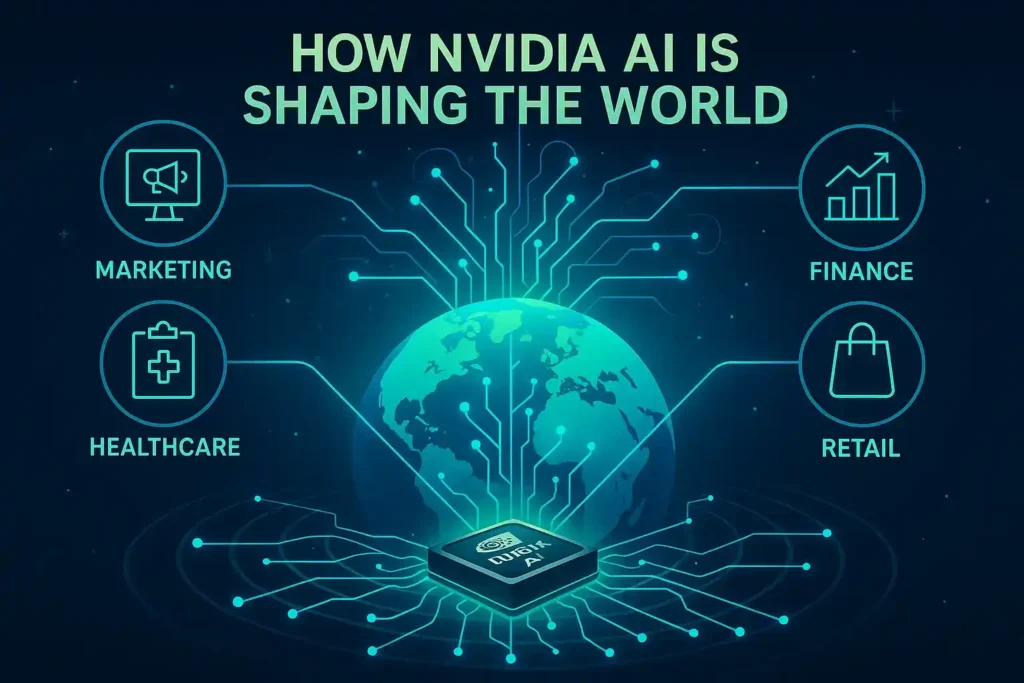
For years, NVIDIA was known for gaming. But today, it’s redefining industries across healthcare, finance, marketing, and retail.
Beyond Gaming: Enterprise and Generative AI Powerhouse
NVIDIA AI powers enterprise tools used by giants such as Hewlett-Packard, Amazon, and Google Cloud. It’s the technology behind generative AI platforms, enabling real-time creation of videos, ad creatives, and data insights.

Marketing-Relevant Use Cases
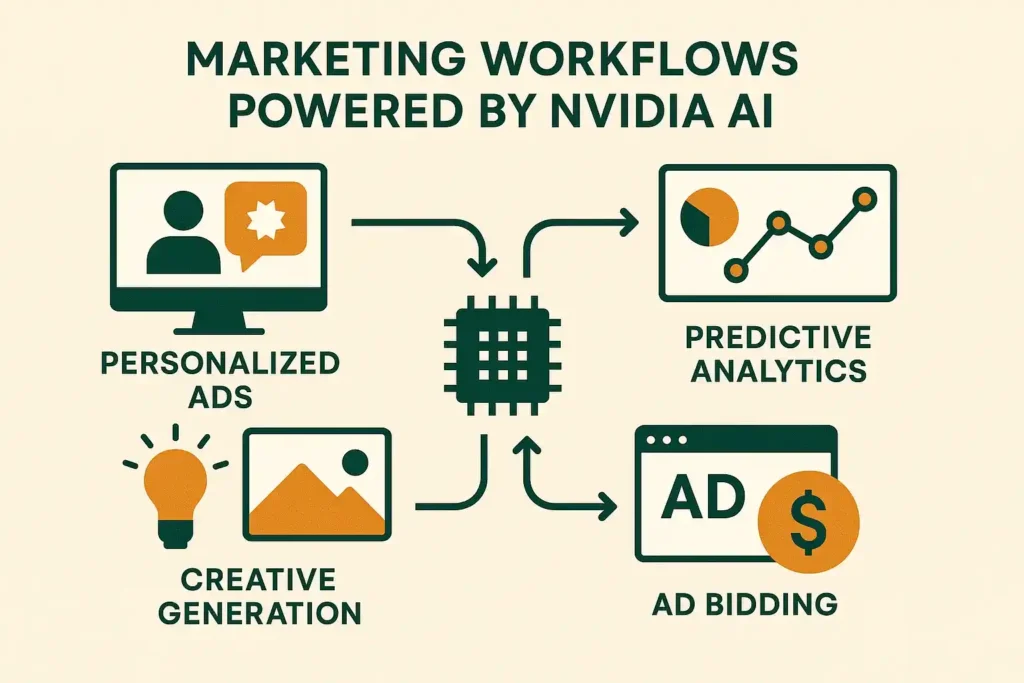
- Personalisation at Scale: Retailers and ad tech companies use NVIDIA GPUs to process billions of customer data points, personalising ads and offers in milliseconds.
- Real-Time Analytics: Marketers can run deep predictive analytics on massive datasets without waiting hours.
- Content Generation: NVIDIA AI accelerates the creation of AI-generated videos, product imagery, and social media assets.
- Ad Tech Optimisation: Faster inference speeds mean smarter bidding, segmentation, and targeting decisions.
Why Infrastructure Matters
Marketers often focus on the tool rather than the engine. But the speed, cost-efficiency, and scalability of your marketing AI stack depend directly on infrastructure.
When NVIDIA GPUs power your tools, you get real-time performance, better analytics, and faster campaign insights, things that can directly boost ROI.
Why Marketers Should Care: Benefits & Opportunities
Let’s be clear, you don’t need to buy an NVIDIA GPU to benefit from it. But understanding its advantages helps you choose more innovative tools, partners, and strategies.
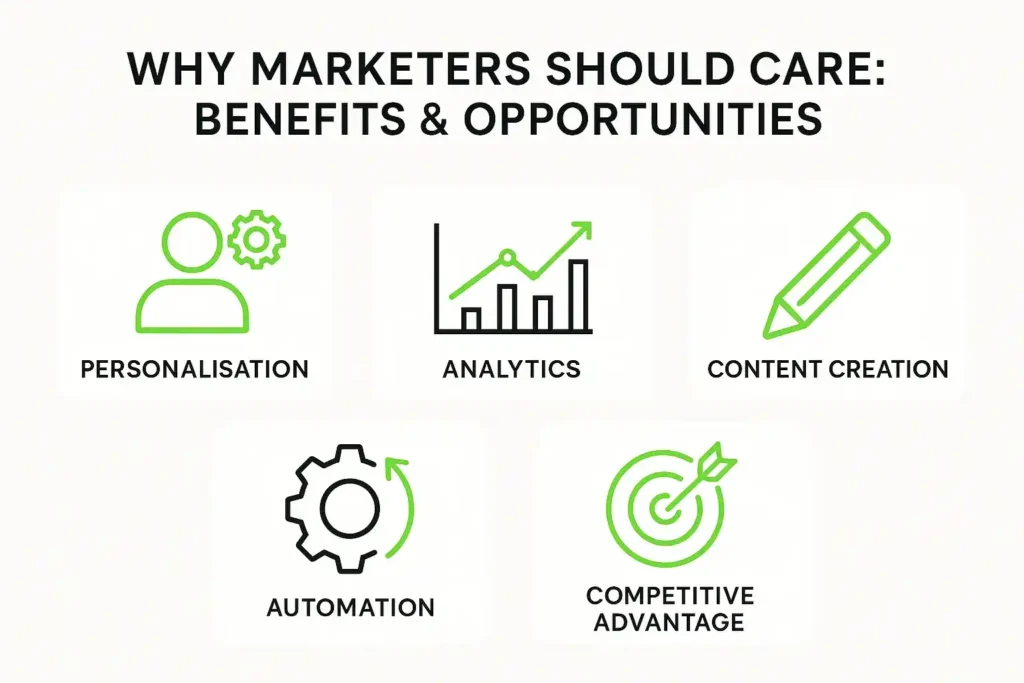
Here’s how NVIDIA AI impacts marketing directly:
- Hyper-Personalised Customer Experiences: With real-time inference and powerful GPUs, marketers can deliver content tailored to each customer in milliseconds.
- Superior Analytics and Predictive Modelling: NVIDIA’s infrastructure efficiently handles massive data streams, enabling faster, more accurate predictive marketing and behaviour forecasting.
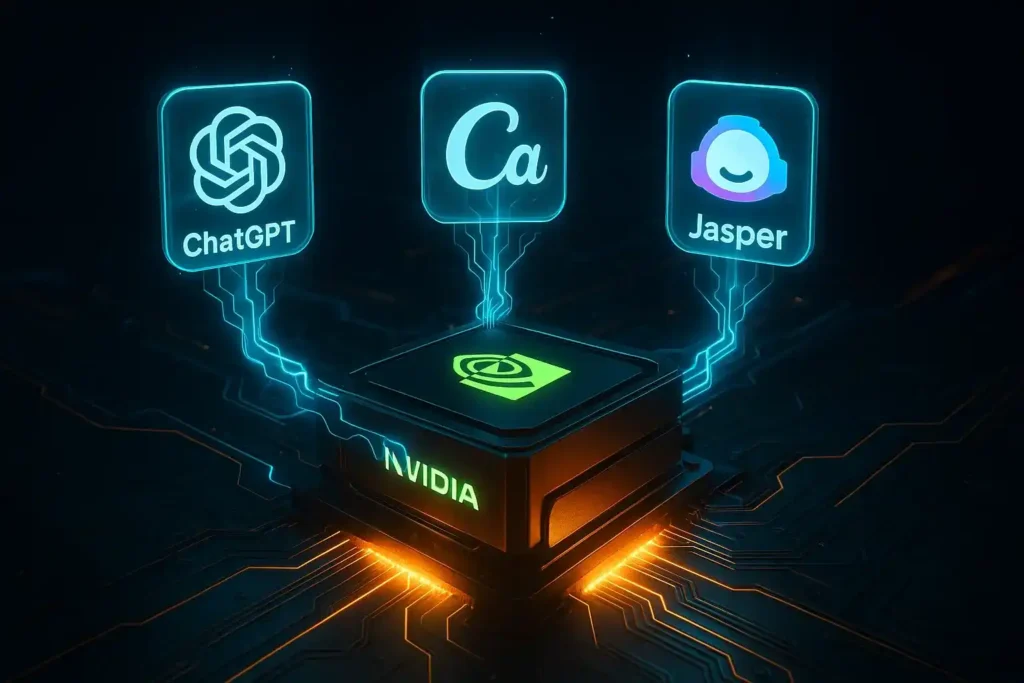
- Faster Content & Creative Generation: Whether it’s text, visuals, or video, tools built on NVIDIA AI (like Runway, Jasper, and Synthesia) accelerate the creative process.
- Marketing Automation at Scale: From programmatic ads to dynamic email segmentation, NVIDIA AI infrastructure allows seamless automation powered by real-time data insights.
- Competitive Advantage: Early adopters of infrastructure-driven AI marketing gain speed, efficiency, and smarter data decisions, leaving traditional marketers behind.
How to Leverage NVIDIA AI in Your Marketing Practice?
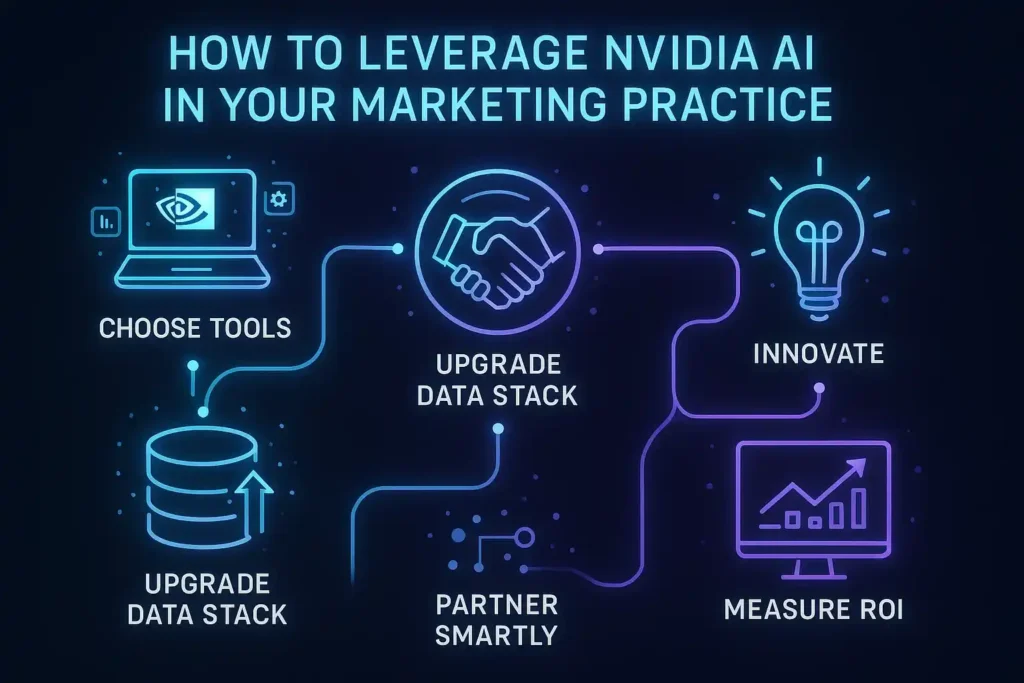
Even if you’re not a data engineer or buying GPUs, here’s how to benefit from NVIDIA AI marketing infrastructure:
- Use Tools Built on NVIDIA AI: Many marketing platforms (Adobe, Canva, HubSpot, and AI video tools) are powered by NVIDIA tech. Knowing this helps you choose tools with better performance and reliability.
- Upgrade Your Data Stack: Prepare your marketing data pipelines and MLOps systems to support AI workflows that leverage high-performance infrastructure.
- Partner Smartly: Work with agencies, vendors, or martech providers that rely on GPU-based AI infrastructure for superior results.
- Innovate Use Cases: Think beyond campaigns. For instance, marketing attribution models can leverage NVIDIA-powered AI to track user journeys in real time (as Adobe does with NVIDIA’s AI platform).
- Measure ROI: Faster infrastructure = faster insights. Measure how improved AI speeds reduce costs or enhance customer conversions.
Challenges & Considerations for Marketers
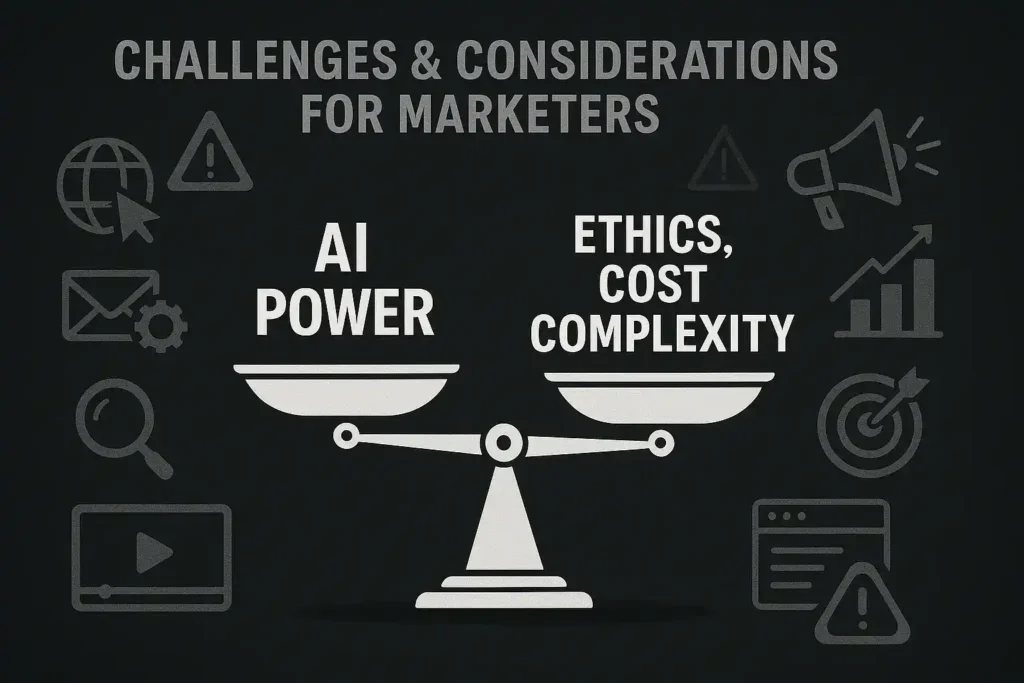
Before diving headfirst into AI-driven marketing, consider these practical challenges:
- Infrastructure Costs: High-performance AI doesn’t come cheap.
- Complexity: Understanding data pipelines and GPU architecture can be overwhelming for traditional marketing teams.
- Data Quality & Bias: Fast AI is only as good as the data you feed it.
- Ethics: Bias and misinformation risks increase with automated systems.
- Investment Timing: Not every brand needs full AI integration today, but preparing your stack in 2025 sets you up for 2026 and beyond.
Future of Marketing with NVIDIA AI
According to NVIDIA CEO Jensen Huang, the future lies in “AI factories”, data centres where digital intelligence is continuously produced and refined.
For marketers, this means one thing:
Agentic AI systems that can analyse, create, and decide in real time.
Imagine campaign optimisation that happens without manual input, or ad creatives that evolve dynamically in response to live user reactions.
As infrastructure, generative AI, and real-time decisioning merge, marketing roles will shift from execution to orchestration.
Marketers who understand AI infrastructure, even at a surface level, will have a massive strategic advantage in the next evolution of digital marketing.
Your Next Steps for 2025–26
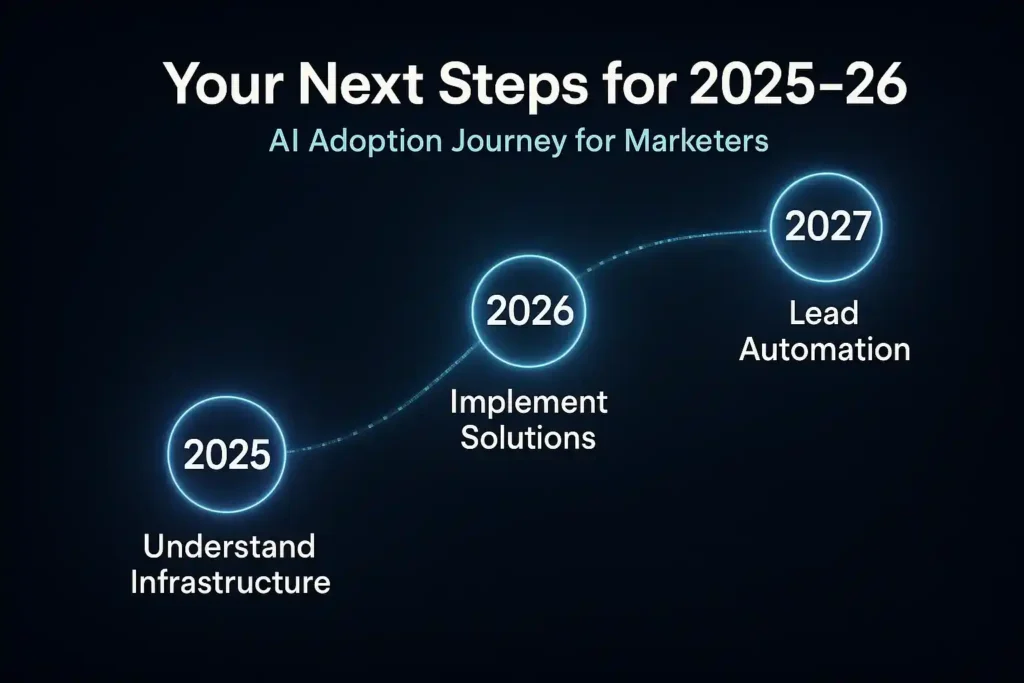
NVIDIA AI isn’t just a tech buzzword; it’s the engine driving the global marketing revolution.
Here’s what to take away:
- The best marketing tools in 2025 are built on NVIDIA AI infrastructure.
- Understanding how that infrastructure shapes speed, analytics, and automation helps you choose more innovative tools.
- The future of marketing belongs to those who combine data strategy + AI infrastructure knowledge.
Summary
You’ve learned how NVIDIA AI marketing infrastructure works, why it’s transforming analytics, personalisation, and automation, and how marketers can leverage its impact, even without owning GPUs.
As we move into 2026, one thing is sure:
The marketers who understand the engine behind AI will be the ones driving it.